
I know it's been a while since I posted, but starting a new role at a new company has been a tougher start than I imagined. 1 I've started getting my feet under me, with a couple of ideas on the back burner that I've finally had time to start working on. A couple of these ideas required me to finally get LaTeX/MathJax rendering working on my site.
I installed the packages I needed and did a quick sample post to the site to see if everything was working:
I loaded my site to make sure the rendering worked correctly and saw something I didn't expect to see... ads.
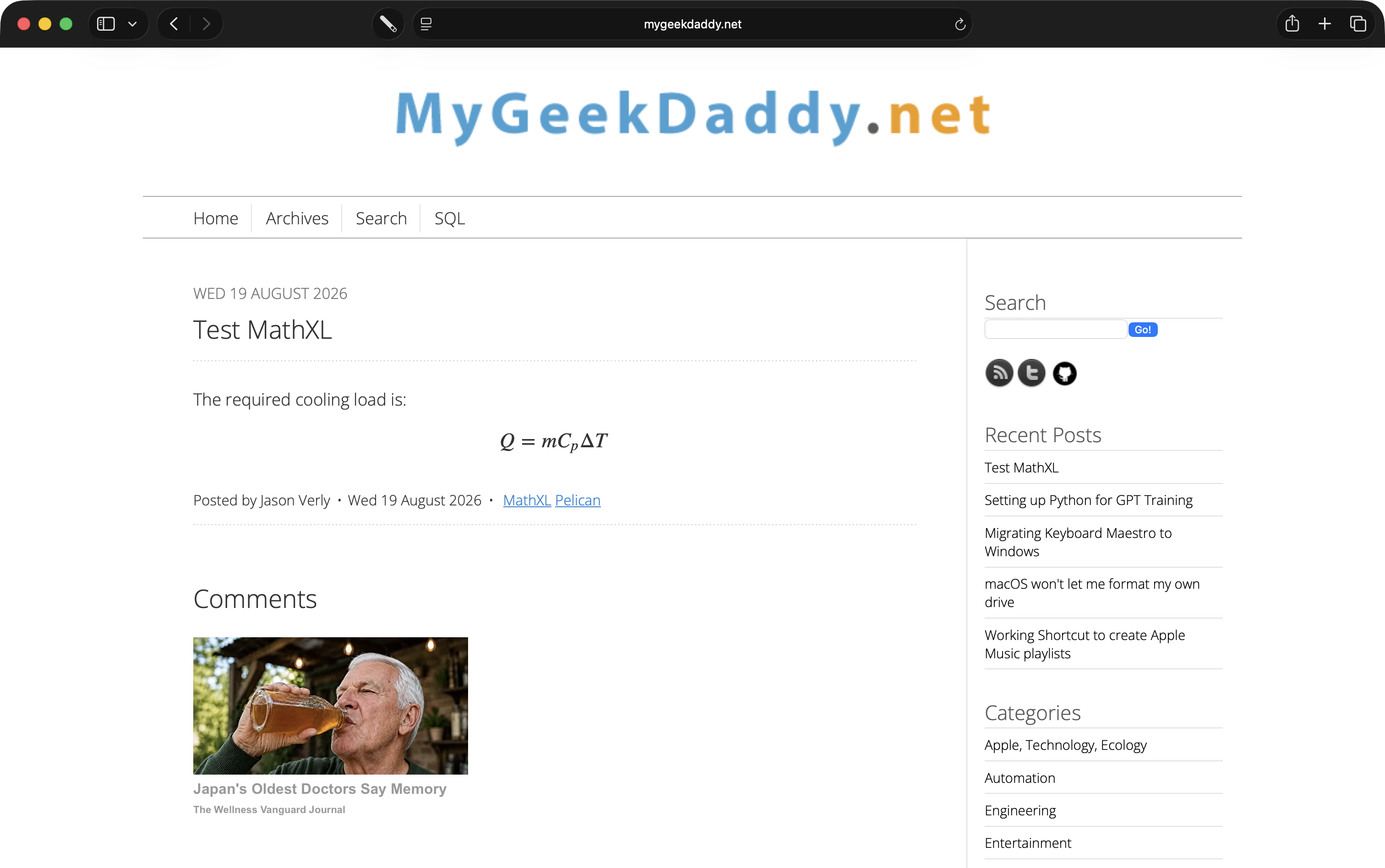
For a long time, especially when I was active in the Reliability community, I used Disqus to allow questions/feedback to be submitted from people reading my posts, especially the technical ones related to Maximo. Turns out Disqus started doing ad injection a little while back but I apparently never got the memo of the change.
The quick post I made to check the MathJax rendering was from work computer over lunch. After the post was submitted, I used my work computer to see if the post was rendering correctly. The rendering worked, but it turns out my work computer doesn't have the same ad blocking as my personal computer. I finally got to see my website as most internet users were seeing it. Ad blockers on my personal computer kept my site looking clean whenever I would visit my site after submitting a blog post. 2
Editing my Pelican Theme
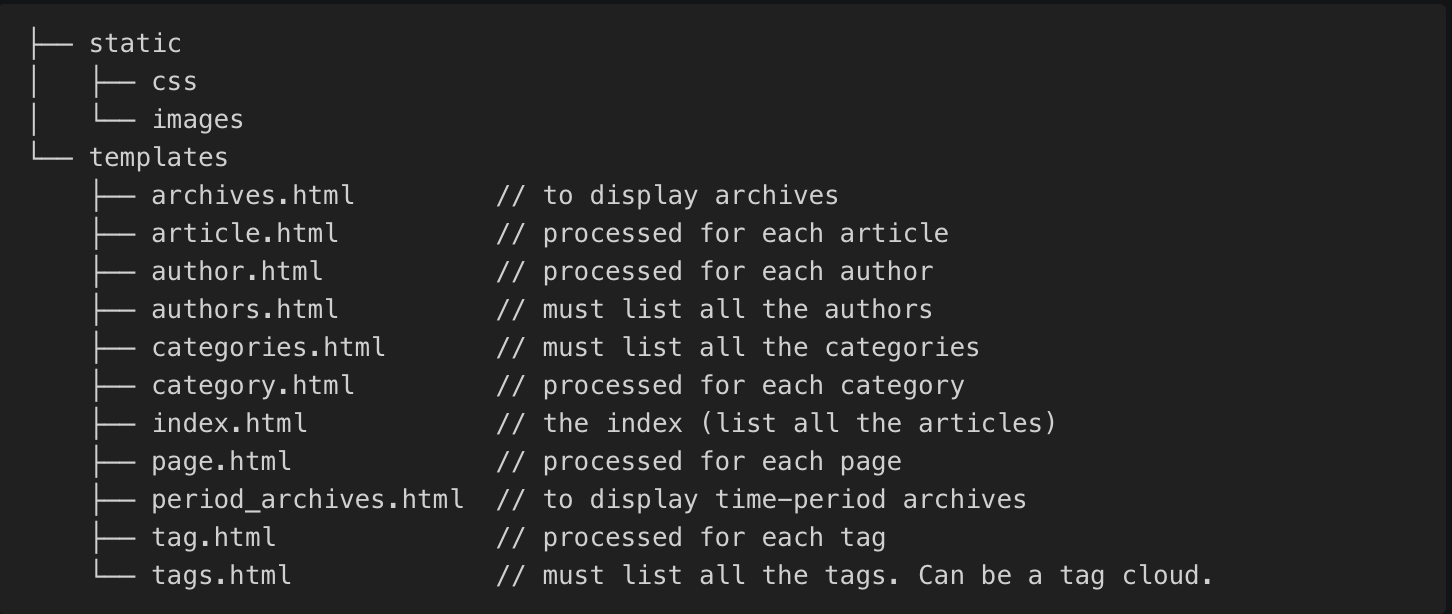
My site uses a static HTML generator package called Pelican Pelican. I've played with other site generator packages, but I've stayed with Pelican because of its simplicity and my blog post workflow has settled into Pelican's setup. Pelican uses a Jinja templating engine to create structure of the HTML in the files generated for the site. The basic structure looks like this:
I dug into the theme folder to see what is getting populated into the footer of the website. The first spot I wanted to check was in the base.html file. After reviewing roughly 100 lines in the file I found my next clue at the bottom:
...
  <footer role="contentinfo">{% include '_includes/footer.html' %}</footer>
  {% include '_includes/after_footer.html' %}
  <a href="#0" class="cd-top">Top</a>
</body>
</html>
There are additional items being added at the end of the web page in the after_footer.hml theme file. I opened up the file and found what I was looking for:
{% include '_includes/analytics.html' %}
{% include '_includes/piwik.html' %}
{% include '_includes/disqus_script.html' %}
{% include '_includes/twitter_sharing.html' %}
{% include '_includes/google_plus_one.html' %}
{% include '_includes/facebook_like.html' %}
Bingo! I opened up the disqus_script.html file and found there is a call out for a javascript file - embed.js - being hosted by Disqus:
{% if DISQUS_SITENAME %}
    <script type="text/javascript">
      var disqus_shortname = '{{ DISQUS_SITENAME }}';
      {% if article %}
          var disqus_identifier = '/{{ article.url }}';
          var disqus_url = '{{ SITEURL }}/{{ article.url }}';
          var disqus_title = '{{ article.title }}';
      {% endif %}
      (function() {
        var dsq = document.createElement('script'); dsq.type = 'text/javascript'; dsq.async = true;
        dsq.src = "//" + disqus_shortname + '.disqus.com/embed.js';
        (document.getElementsByTagName('head')[0] || document.getElementsByTagName('body')[0]).appendChild(dsq);
       })();
    </script>
{% endif %}
To disable the embed.js required me to either A) join a paid tier or B) remove Discqus from the site. I chose the latter because I'm invested enough with the hosting fees and recurring domain renewal.
So I trimmed out all of the social media stuff from the after_footer.html file and minimized it down to a comment reading:
{# file cleared on 2026-08-21 of social media links #}
Turns out I wasn't the only willing to say goodbye to Disqus.